
When planning a bathroom renovation, one of the biggest decisions you’ll make is choosing the right wall covering for your shower area. Traditional ceramic tiles have been a popular option for decades, but modern homeowners are increasingly turning to shower wall panels as a stylish, practical, and low-maintenance alternative.
With numerous materials, designs, and price ranges available, finding the ideal option may seem overwhelming. We will walk you through everything you need to know about it, including their benefits, types, materials, costs, and key factors to consider before making a purchase.
What Are Shower Wall Panels?
It is large waterproof sheets designed to cover the walls inside shower enclosures and wet areas. Unlike traditional tiles that require grout lines, these panels create a smooth, nearly seamless surface that helps prevent water damage and simplifies cleaning.
Available in various materials such as PVC, acrylic, laminate, fiberglass, and composite stone, they can mimic the appearance of natural stone, marble, wood, or tile while offering superior convenience.
Why Homeowners Are Choosing Wall Panels
Modern bathrooms prioritize simplicity, durability, and style. Wall panels align perfectly with these goals because they:
- Reduce cleaning time
- Minimize mold growth
- Provide a modern appearance
- Install faster than tile systems
- Offer excellent waterproof protection
Benefits of Shower Wall Panels
Before choosing a product, it’s important to understand why it has become increasingly popular. One of the biggest advantages is their waterproof design. Unlike grout lines that can absorb moisture over time, most panel systems create a protective barrier against water penetration.
This helps reduce the risk of:
- Water damage
- Mold growth
- Structural deterioration
- Expensive repairs
2. Easy Maintenance
Bathroom cleaning can be frustrating, especially when dealing with stained grout. Since wall panels have minimal seams, cleaning becomes significantly easier.
Most surfaces only require:
- Warm water
- Mild soap
- Soft microfiber cloth
3. Quick Installation
Installing tiles often requires extensive preparation, precise spacing, grouting, and curing time. Many Shower Wall Panels can be installed directly over existing surfaces, reducing labor costs and renovation downtime.
4. Stylish Design Options
Modern panels are available in countless finishes, including:
- Marble effect
- Stone textures
- Concrete look
- High-gloss finishes
- Matte surfaces
- Contemporary patterns
These options allow homeowners to achieve luxury aesthetics without premium material costs.
5. Long-Term Value
Although some premium products may have higher upfront costs, their durability and reduced maintenance requirements often provide excellent value over time.
Types of Shower Wall Panels
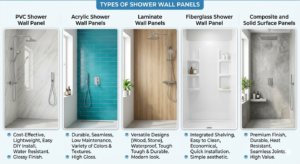
Not all created equal, and choosing the right material can improve your bathroom’s appearance, durability, and maintenance. Different panel materials provide different benefits, from affordable solutions to premium designs. Understanding each type helps you choose the best option for your shower renovation.
PVC Shower Wall Panel
PVC wall panels are affordable, lightweight, and practical for modern bathroom projects. They provide excellent waterproof protection and are easy to install. These panels are a great choice for homeowners who want a simple and budget-friendly solution.
Acrylic Shower Wall Panels
Acrylic wall panels offer a sleek and glossy appearance that enhances modern bathroom designs. They are highly resistant to moisture and provide a smooth surface that is easy to clean. Their stylish finish makes them suitable for contemporary shower spaces.
Laminate Wall Panels
Laminate shower wall panels are popular because they combine realistic designs with strong durability. They can create the appearance of natural materials like stone and wood without the high cost. These panels are available in various patterns and finishes.
Fiberglass Shower Wall Panel
Fiberglass wall panels have been widely used because they are affordable and easy to install. They are lightweight, water-resistant, and suitable for quick bathroom upgrades. These panels are often chosen for simple and practical renovations.
Composite and Solid Surface Panels
Composite and solid surface wall panels are premium options designed for durability and luxury. They provide a high-end appearance with excellent resistance to moisture, stains, and everyday wear. These panels can create a modern and elegant bathroom look.
Best Shower Wall Panel Materials Compared
Choosing the right material depends on your budget, style preferences, and maintenance expectations.
| Material | Cost Range | Durability | Maintenance | Appearance |
| PVC | Low | Moderate | Very Easy | Good |
| Acrylic | Medium | High | Easy | Excellent |
| Laminate | Medium | High | Easy | Excellent |
| Fiberglass | Low-Medium | Moderate | Easy | Good |
| Composite Stone | High | Very High | Easy | Premium |
| Solid Surface | High | Very High | Easy | Luxury |
How to Choose the Best Shower Wall Panels
The ideal choice depends on several practical factors. Bathroom dimensions can influence both design and installation choices.
Small Bathrooms
For smaller spaces:
- Use light-colored finishes
- Choose glossy surfaces
- Consider seamless designs
Large Bathrooms
Larger bathrooms allow for:
- Darker finishes
- Bold textures
- Statement wall designs
Evaluate Material Quality
Quality should always take priority over price alone.
Look for:
- Waterproof certification
- Impact resistance
- Scratch resistance
- UV protection
- Manufacturer warranties
Think About Design and Style
Your bathroom should complement the overall aesthetic of your home.
- Marble-Look Panels: Offer luxury appeal without natural stone maintenance.
- Stone-Effect Panels: Provide texture and depth for contemporary bathrooms.
- Minimalist Matte Finishes: Perfect for modern and Scandinavian-inspired spaces.
- Glossy Contemporary Panels: Reflect light and create a clean, sophisticated appearance.
Consider Installation Requirements
Some products are specifically designed for DIY installation, while others require professional expertise.
Before purchasing, evaluate:
- Your skill level
- Required tools
- Project timeline
- Installation complexity
Many homeowners appreciate shower wall panels because they can dramatically reduce renovation time compared to traditional tile projects.
Compare Maintenance Needs
Even though most panel systems are easy to clean, some materials perform better than others.
When comparing products, consider:
- Stain resistance
- Scratch resistance
- Cleaning requirements
- Long-term durability
Selecting a low-maintenance option can save significant time over the years.
Set a Realistic Budget
Budget planning should include:
- Material costs
- Installation expenses
- Accessories and trims
- Waterproofing products
- Future maintenance
While affordable options can work well, investing in higher-quality wall panels often provides better long-term value.
Popular Design Trends in Modern Bathrooms
Bathroom design trends continue evolving, and wall panels play a major role in creating contemporary spaces.
- Large Seamless Panels: Large-format panels reduce visible joints and create a sleek appearance.
- Marble-Inspired Finishes: Elegant marble effects remain one of the most requested bathroom styles.
- Natural Stone Looks: Stone-inspired designs offer timeless appeal and complement various décor styles.
- Textured Surfaces: Subtle textures add visual interest while maintaining a sophisticated appearance.
- Eco-Friendly Materials: Sustainability has become increasingly important, leading manufacturers to develop environmentally conscious panel options.
Shower Wall Panel Installation Guide
One of the main reasons homeowners choose shower wall panels is the relatively simple installation process. While premium systems may require professional assistance, many modern panels are designed for DIY projects.
Preparing the Shower Area
Before installation begins, the wall surface should be clean, dry, and structurally sound. Remove any loose tiles, damaged drywall, or old adhesive residue.
Proper preparation helps ensure:
- Better panel adhesion
- Longer lifespan
- Improved waterproofing
- Professional-looking results
Measuring and Cutting Panels
Accurate measurements are essential. Measure the height and width of each wall section carefully before cutting.
Many panel systems can be cut using:
- Circular saws
- Fine-tooth hand saws
- Jigsaws
- Utility knives (for some PVC products)
Installing the Panels
Most panels are attached using construction adhesive or specialized wall panel adhesives.
The basic process includes:
- Apply adhesive evenly.
- Position the panel carefully.
- Press firmly against the wall.
- Secure trims and corner pieces.
- Seal all joints with waterproof silicone.
Common Installation Mistakes to Avoid
Even high-quality panels can underperform if installed incorrectly.
Common mistakes include:
- Poor wall preparation
- Inaccurate measurements
- Insufficient adhesive
- Improper sealing
- Ignoring manufacturer instructions
How Much Do Shower Wall Panels Cost?
Cost is often a major factor when selecting bathroom materials. The price of it varies depending on material, size, brand, and installation requirements.
Budget-Friendly Options: PVC and fiberglass panels are generally the most affordable choices. These products offer reliable performance for homeowners working within a limited budget.
Mid-Range Options: Acrylic and laminate panels provide a balance between affordability and premium appearance. Many homeowners consider these materials the best overall value.
Premium Options: Composite stone and solid-surface panels typically command higher prices but deliver luxury aesthetics and exceptional durability.
Factors Affecting Total Cost
Several variables influence the final project budget:
- Bathroom size
- Material selection
- Labor charges
- Custom finishes
- Trim and accessories
- Waterproofing products
Although premium panels cost more initially, they often provide long-term savings through reduced maintenance and repair needs.
How to Maintain Shower Wall Panels
Proper maintenance helps preserve appearance and performance for many years. A quick wipe-down after shower use can prevent soap scum and water spots from accumulating.
Recommended cleaning supplies include:
- Soft cloths
- Microfiber towels
- Mild dish soap
- Warm water
Weekly Maintenance Routine
Once a week, clean the panels thoroughly using a non-abrasive cleaner.
Focus on:
- Corners
- Seams
- Fixtures
- Silicone joints
Products to Avoid
Avoid harsh cleaning products such as:
- Steel wool
- Abrasive powders
- Strong solvents
- Bleach-based products unless approved
Preventing Mold and Mildew
Good bathroom ventilation plays a critical role in preventing moisture buildup.
Consider:
- Installing an exhaust fan
- Opening windows when possible
- Wiping excess moisture after showers
Common Mistakes When Choosing Shower Wall Panels
Buying the wrong product can lead to disappointment and unnecessary expenses.
Choosing Based Only on Price: The cheapest option isn’t always the most economical in the long run. Low-quality materials may require earlier replacement.
Ignoring Material Performance: Not all panels offer the same level of durability, scratch resistance, or waterproof protection. Always compare specifications before purchasing.
Overlooking Bathroom Style: The wall finish should complement the rest of the bathroom design. A mismatch can reduce the visual appeal of the space.
Underestimating Installation Requirements: Some products require specialized tools or professional expertise. Understanding installation complexity beforehand prevents surprises.
Neglecting Maintenance Considerations: A beautiful finish should also be practical. Consider cleaning requirements and long-term upkeep when evaluating options.
Are Shower Wall Panels Worth It?
For many homeowners, the answer is yes. Compared to traditional tile systems, wall panels offer numerous advantages:
- Faster installation
- Fewer grout lines
- Easier maintenance
- Excellent waterproof protection
- Wide design selection
They are particularly beneficial for people who want a modern bathroom without the ongoing maintenance associated with tiled surfaces.
Final Verdict
Choosing the best shower wall panels for your bathroom involves more than simply selecting a design you like. Factors such as material quality, durability, waterproof performance, maintenance requirements, installation complexity, and overall budget all play important roles in determining the right solution for your space.
Today’s market offers an impressive variety of options, from affordable PVC panels to luxurious composite stone systems. This means homeowners can find products that suit virtually every design preference and budget level.
FAQs
Is it better than tiles?
Both options have advantages, but wall panels are generally easier to clean, faster to install, and require less maintenance because they have fewer grout lines.
How long do wall panels last?
High-quality panels can last 15 to 30 years or longer with proper installation and regular maintenance.
Can be installed over existing tiles?
Yes. Many panel systems are designed to be installed directly over existing tiles, provided the surface is clean, stable, and level.
What is the best material for shower wall panels?
The best material depends on your budget and preferences. Acrylic and laminate offer excellent value, while composite and solid-surface panels provide premium durability and appearance.
Are wall panels completely waterproof?
Most modern wall panels are designed to be waterproof when installed correctly with appropriate sealants and trims.