
Intel is one of the most influential semiconductor companies in the world, known for powering billions of devices through its processors. For decades, it has been a key driver of innovation in computing, data centers, and chip manufacturing. The topic of Intel layoffs is widely discussed because it reflects a major shift in the technology industry. As companies move toward automation, AI, and cost efficiency, even leading giants like Intel are restructuring their workforce.
What Are the Intel Layoffs?
It refers to the company’s decision to reduce its workforce as part of a broader restructuring strategy. This usually happens when a company needs to cut costs, improve efficiency, or realign its focus toward future technologies. In Intel’s case, it is part of a long-term transformation in a highly competitive semiconductor industry.
Scale of Job Cuts
Intel has gone through multiple rounds of workforce reductions, impacting employees across different regions and business units. While exact numbers vary depending on reporting periods, the scale is considered significant within the tech industry. These changes highlight Intel’s effort to streamline operations and adapt to market pressures.
Departments Affected
The layoffs have impacted various departments, including engineering, manufacturing support, and corporate operations. Some administrative and global support roles have also been affected as Intel restructures its internal organization. The company is prioritizing high-growth areas such as AI chip development and advanced semiconductor design.
Why Are Intel Layoffs Happening?
One of the major reasons behind it is the slowdown in demand for traditional PC chips. With the rise of cloud computing, mobile devices, and AI-driven systems, the demand pattern in the semiconductor industry has changed significantly. This shift has forced Intel to adjust its production and workforce strategy.
Cost-Cutting and Profit Pressure
Intel is also under strong pressure to improve profitability and control rising operational costs. Layoffs are often used as a financial strategy to reduce expenses and maintain competitive margins. This allows the company to redirect resources toward innovation and future growth opportunities.
Shift Toward AI and Advanced Technology
The global tech industry is rapidly evolving, with artificial intelligence becoming the central focus of innovation. Intel is investing heavily in AI chips, data center technologies, and next-generation computing systems. This transition requires restructuring its workforce to align with new technical priorities.
Global Competition in Semiconductor Industry
Intel faces intense competition from companies like AMD, NVIDIA, and other emerging chipmakers. These competitors have gained strong positions in performance-driven and AI-focused markets. As a result, Intel is restructuring its operations to remain competitive in a fast-changing global industry.
Impact of Intel Layoffs on Employees
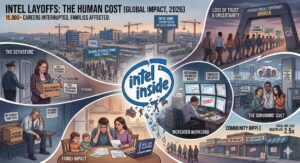
It has directly affected thousands of employees, creating financial and emotional challenges. Sudden job loss can lead to uncertainty, especially in industries that are rapidly evolving. Many workers now face the difficult task of finding new roles in a competitive job market.
Severance Packages and Support
Intel generally provides severance packages to support affected employees during transitions. These may include financial compensation, temporary benefits, and in some cases, career support services. While helpful, these measures do not fully eliminate the stress caused by sudden job changes.
Career Uncertainty in Tech Industry
The layoffs have also increased uncertainty across the wider technology sector. Even highly skilled professionals are facing more competition for fewer roles in certain areas. This reflects how quickly the tech industry is changing due to automation and restructuring.
Impact of Intel Layoffs on the Tech Industry
It signal a major shift in the semiconductor landscape. They highlight changing demand patterns and the industry’s move toward advanced technologies like AI chips. This transformation is reshaping how semiconductor companies plan their future strategies.
Competitors Gaining Advantage
As Intel restructures, competitors such as AMD and NVIDIA may gain additional market opportunities. They can attract experienced talent and expand their influence in high-growth sectors. This increases competition and accelerates innovation across the industry.
Supply Chain and Industry Reaction
Intel’s restructuring also affects suppliers, manufacturers, and related tech companies. Changes in workforce and production planning can influence the broader semiconductor supply chain. Industry experts are closely monitoring how these changes will impact long-term stability.
Financial Impact of Intel Layoffs
News of Intel layoffs often impacts investor sentiment and stock market performance. Investors react based on expectations of cost savings and future growth potential. This can lead to short-term fluctuations in stock prices.
Investor Confidence
Some investors view layoffs as a necessary step toward long-term recovery and efficiency. Others see them as a sign of deeper structural challenges within the company. Overall confidence depends heavily on Intel’s future execution strategy.
Revenue and Cost Reduction Strategy
Intel is working to balance cost reduction with long-term revenue growth. Layoffs help reduce operational expenses, allowing more investment in innovation and new technologies. This is part of a broader financial restructuring plan aimed at improving competitiveness.
Intel’s Future Plans After Layoffs

Intel is strongly shifting its focus toward artificial intelligence and advanced computing technologies. The company is investing in AI chip development and next-generation processing solutions. This strategy is expected to define its future competitiveness in the global market.
Manufacturing Expansion Strategy
Intel continues to expand its semiconductor manufacturing capabilities across different regions. This helps the company strengthen supply chain control and reduce dependency on external suppliers. Manufacturing growth remains a key pillar of its long-term strategy.
Long-Term Business Restructuring
The Intel layoffs are part of a broader transformation aimed at reshaping the company’s future. Intel is working to become more agile, efficient, and innovation-driven. This restructuring is expected to redefine its business model in the coming years.
Will Intel Recover After Layoffs?
In the short term, Intel may face challenges such as workforce disruption and market uncertainty. Employee morale and investor confidence can also be affected during restructuring phases. However, such challenges are common during large-scale corporate transitions.
Long-Term Growth Opportunities
In the long run, Intel has strong recovery potential if its strategic plans succeed. With investments in AI, manufacturing, and advanced chips, the company could regain a strong market position. Its future depends on execution and adaptation to industry changes.
Final Verdict
The Intel layoffs represent a major turning point in the company’s evolution. They are driven by market shifts, cost pressures, and the need to adapt to new technologies. Going forward, Intel is expected to focus heavily on AI, innovation, and operational efficiency. The company will likely continue restructuring to strengthen its position in the semiconductor industry. Its success will depend on how effectively it executes this transformation strategy.
FAQs
Why is Intel laying off employees?
Intel is laying off employees to cut costs and restructure its business for future growth.
How many employees are affected?
The number of employees affected by Intel layoffs varies across different restructuring phases.
Is Intel still a strong company?
Yes, Intel is still a strong leader in the semiconductor industry despite the layoffs.
Will Intel hire again in the future?
Yes, Intel is expected to continue hiring in strategic areas like AI and chip design.