
A desk is not just a piece of furniture; it is where ideas are shaped, tasks are completed, and goals begin to take form. Whether you are a student studying for exams, a remote worker managing deadlines, or a creator working on projects, your desk plays a central role in your daily routine. This is why desk organization ideas are so important.
Many productivity studies suggest that a clean environment improves concentration and helps people stay on task for longer periods. When you apply it, you remove distractions and create a workspace that supports deep focus and efficient work.
Benefits of a Well-Organized Desk
One of the biggest advantages of using desk organization ideas is improved focus. When everything is arranged properly, you do not waste time searching for items. Your workflow becomes smoother because all your tools are easily accessible. This allows you to complete tasks faster and with better accuracy.
Saves Time and Reduces Stress
A disorganized desk often leads to wasted time. You may spend minutes looking for a pen, a document, or a charger. Over time, this adds up and increases frustration. An organized desk eliminates these small but frequent interruptions, helping you stay calm and in control.
Creates a Better Work Environment
Your workspace should feel comfortable and motivating. A clean and organized desk creates a positive atmosphere that encourages you to work. It also gives a sense of discipline and professionalism, even if you are working from home.
Desk Organization Ideas for Beginners
The first step in applying it is decluttering. Remove everything from your desk and evaluate each item. Keep only what you truly need. Items that are rarely used should be stored elsewhere. Decluttering helps you reset your workspace and gives you a fresh start.
Keep Only Daily Essentials
Your desk should contain only the items you use every day. This might include your laptop, a notebook, a pen, and perhaps a lamp. Keeping too many items on your desk creates unnecessary clutter. Simplicity is key to maintaining organization.
Use Simple Storage Solutions
You do not need expensive tools to organize your desk. Simple solutions like trays, boxes, and drawer dividers can make a big difference. Group similar items together so that everything has a designated place.
Desk Organization Ideas for Students
 Students often deal with multiple subjects, which can lead to clutter. One of the most effective methods for students is to categorize materials. Use folders, binders, or labeled sections to keep notes and books organized. This makes it easier to find what you need during study sessions.
Creating a Study-Friendly Setup
A good study environment is essential for learning. Ensure your desk has proper lighting, a comfortable chair, and minimal distractions. Keep your study materials within reach, but avoid overcrowding the space.
Managing Small Study Spaces
Not all students have large desks. In small spaces, organization becomes even more important. Use vertical storage like shelves or wall organizers to maximize space. Stackable containers can also help you keep your desk neat without taking up too much room.
Desk Organization Ideas for Remote Workers
Remote workers need a dedicated workspace to stay productive. Even if you do not have a separate room, create a specific area for work. This helps your brain associate that space with productivity and focus.
Managing Cables and Devices
Modern desks often include multiple devices, which can lead to cable clutter. Use cable organizers, clips, or ties to keep wires neat. This not only improves the appearance of your desk but also makes it safer and easier to manage.
Separating Work and Personal Space
One common challenge for remote workers is mixing work and personal life. Keep your work items separate from personal belongings. This creates a clear boundary and helps you maintain a healthy balance.
Desk Organization Ideas for Creators
Creators often use a variety of tools, such as cameras, drawing tablets, or editing equipment. Assign a specific place for each item to avoid confusion. Keeping your tools organized allows you to focus more on creating and less on searching.
Keeping Inspiration Within Reach
Creativity thrives in an inspiring environment. You can keep a small board or section of your desk for ideas, sketches, or references. However, avoid adding too many items, as this can lead to clutter.
Designing an Aesthetic Workspace
An aesthetically pleasing desk can boost motivation. Choose a simple design with a few decorative elements that reflect your personality. The goal is to create a balance between style and functionality.
Smart Storage and Space-Saving Ideas
One of the most effective desk organization ideas is using vertical space. Shelves and pegboards allow you to store items above your desk, freeing up valuable surface space.
Drawer Organizers and Storage Boxes
Drawers can quickly become messy if not organized properly. Use dividers to separate items into categories. Storage boxes are also useful for keeping less frequently used items out of sight.
Multi-Functional Desk Accessories
Choose accessories that serve more than one purpose. For example, a desk lamp with built-in storage or a stand that holds both your phone and stationery can save space and reduce clutter.
Minimalist Desk Organization Ideas
- Keeping a Clean and Simple Setup: Minimalism focuses on simplicity. Keep only the items that are necessary for your work. This creates a clean and distraction-free environment.
- Reducing Visual Clutter: Too many colors, patterns, or decorations can be distracting. Stick to a simple color scheme and avoid overcrowding your desk with decorative items.
- Choosing Functional Items Only: Every item on your desk should have a clear purpose. If something does not contribute to your work, it is better to remove it.
Must-Have Desk Organization Tools
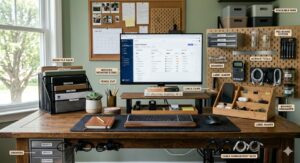
- Cable Management Accessories: Cable organizers, clips, and sleeves help keep wires under control. This is an essential part of modern desk organization ideas.
- Desk Trays and Holders: Trays and holders are useful for organizing papers, documents, and stationery. They keep your desk tidy and make items easy to access.
- Digital Organization Tools: Not all organizations are physical. Digital tools for notes, scheduling, and task management can reduce paper clutter and improve efficiency.
Daily Habits to Keep Your Desk Organized
- 5-Minute Daily Cleanup Routine: Spend a few minutes at the end of each day cleaning your desk. This prevents clutter from building up over time.
- Weekly Reset System: Once a week, take time to reorganize your desk and remove unnecessary items. This keeps your workspace fresh and functional.
- Staying Consistent: Consistency is the key to long-term organization. Small daily habits are more effective than occasional deep cleaning.
Final Thoughts
Desk organization ideas are practical tools that help you create a workspace that supports your goals. Whether you are a student, a remote worker, or a creator, an organized desk can improve your focus, save time, and reduce stress. The key is to start with simple changes, build consistent habits, and create a system that works for your needs. Over time, these small improvements will lead to a more productive and enjoyable work environment.